Carpenter Ant Exterminator and Ant Control in Shelton, CT
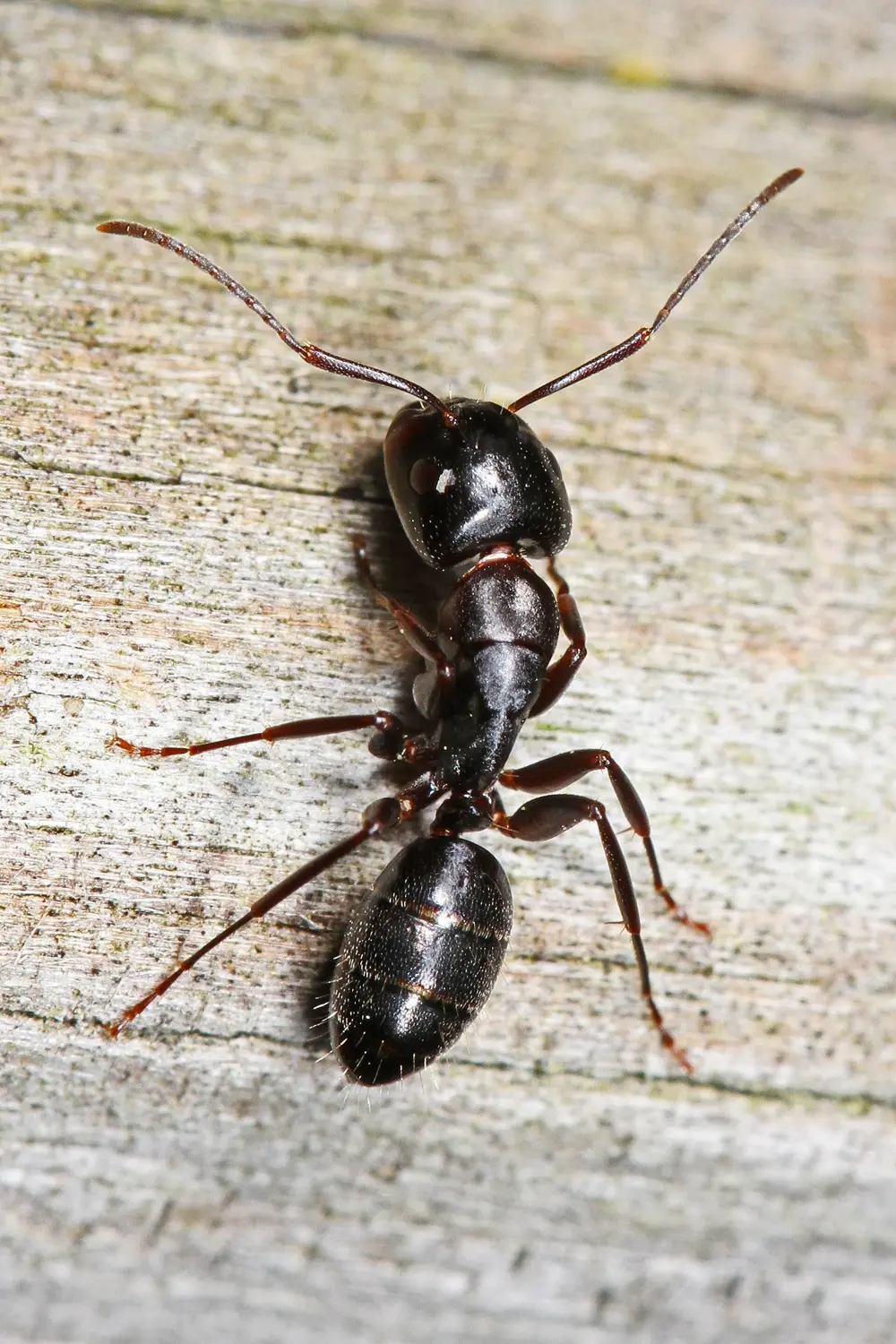
When someone in Shelton calls about ants, it's usually carpenter ants. They're big, black or black and red, and they nest inside wood. They don't eat it. They hollow it out into galleries, and they much prefer wood that's already damp or softened by a leak.
That puts older Shelton homes squarely in their sights. Think of a sill plate on a fieldstone foundation, a porch post sitting in wet soil, a window frame under a gutter that overflows every storm. The parent colony often lives in a tree or stump along the wooded lot line, with satellite nests inside the walls of the house. You see it again and again in older Huntington homes near the Far Mill River, and in plenty of newer houses where the deck ledger stays wet.
Smaller ants turn up too. Pavement ants come up through slab cracks and garage floors, and odorous house ants march to the kitchen after a spring rain. Each one calls for a different fix, so it helps to know which ant you have before anything gets sprayed.
How you know it's carpenter ants and not the little ones
Size is the first clue. Carpenter ant workers are noticeably bigger than the small brown ants that trail along the counter. Timing is the second. Large ants indoors in February or early March almost always mean a nest inside a heated wall, since anything outside is still asleep. A few other things point the same way.
- Little piles of sawdust-like frass under baseboards or window trim
- Winged ants inside, often gathered at a window
- A faint rustling in a wall late at night
- A steady trail between a tree or stump and the house
- Soft or hollow-sounding wood near an old leak
Finding the nest, not just the trail
Spraying the ants you can see rarely solves anything. The nest is what matters. The tech usually starts with questions: when did you first see them, big or small, winged or not, which rooms? Then comes the walk. Outside they check the sill line, porch posts, deck ledgers, window trim and anywhere the gutters spill over. Inside they look at bathrooms, the kitchen and any room that once sat under a roof leak. In a fieldstone basement, the top of the foundation wall gets a slow look with a flashlight.
Nearby trees, stumps and woodpiles get checked for the parent colony, and treatment goes into the nest sites and the routes into the house. A big colony or several satellite nests may need a follow-up a few weeks later. If the winged insects turn out to be termites instead, the conversation shifts to termite treatment at the foundation, and our guide to telling the two apart is worth a read before the visit.
To speak with someone about your home, telephone (203) 953-7616.
Sills, porch posts and wood that never quite dries
Carpenter ants are often a sign of a water problem somebody hasn't found yet. Fix it and they have much less reason to come back. Trim branches off the roof and siding, keep firewood away from the house and up off the ground, clean the gutters and pull mulch back a few inches from the foundation. Hold off on store-bought spray at the trail, though. It can scatter the colony and make the nest harder to find.
The price comes from the company and depends on how many nests there are, whether they're in walls, ceilings or outside in a tree, and how long the ants have been at it. Some people fold ant work into a general seasonal plan so the spring visit comes on schedule. Old clapboard and deck rails that suit ants tend to suit paper wasps too, so if you've seen both, mention wasp nest removal on the same call. Wooded lots in Monroe and hillside houses in Derby see a lot of this.
Questions We Get
Why am I seeing ants inside in February?
A nest inside a heated wall can wake up early. Big ants indoors in late winter usually mean the nest is in the house, not out in the yard.
Do carpenter ants mean I've got water damage?
Often, yes. They go for wood that's damp or already soft. A nest is a good reason to check for a leak, a clogged gutter or wood touching soil nearby.
Will one treatment take care of them?
Sometimes. A large colony or several nests may need a follow-up. The tech will tell you what to expect after the inspection.
Serving Downtown Shelton, Huntington, White Hills, Derby, Ansonia, Seymour, Monroe, Trumbull, Stratford, Oxford.