Wasp Nest Removal in Shelton, CT
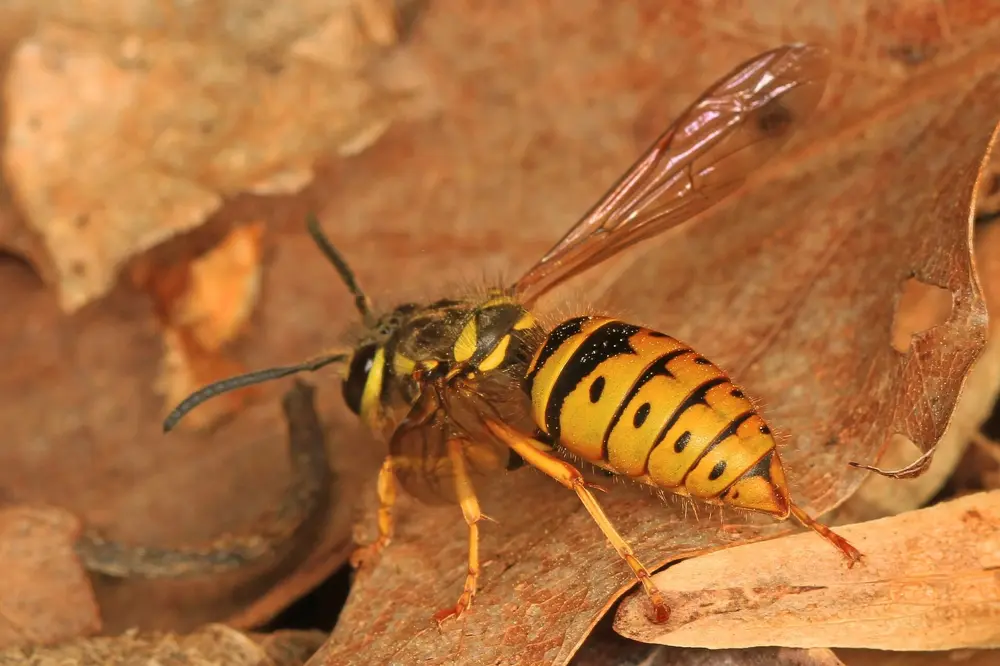
Wasp calls in Shelton pick up in July and peak in late August, when colonies are at their largest and least patient. Running the mower over a ground nest is one of the most common ways people get stung around here, and it usually happens along the same stretch of stone wall every year.
Each kind nests in its own spot. Yellow jackets like the ground, the gaps in old stone walls and the hollow spaces behind siding. Bald-faced hornets hang gray paper nests in trees and shrubs. Paper wasps build open, umbrella-shaped combs under eaves, deck rails and shutters. If anyone in the house is allergic, please don't take on a nest yourself.
Yellow jackets in the stone wall and under the lawn
Shelton has miles of fieldstone wall, and the gaps between the stones make ideal yellow jacket homes. Older clapboard with gaps at the corner boards does too, which is why wall nests turn up so often in older Huntington houses. The entrance to a ground nest is just a small hole, often under a shrub, at the foot of the wall or along a mowed path. Most people only find it when the yellow jackets pour out.
A nest inside a wall void is a different job from one in the lawn. The tech treats through the entrance and may tell you to wait before sealing the hole. Plug it too soon and the wasps can chew their way through the drywall into a room instead. What usually tips people off:
- A steady stream of wasps going in and out of one hole in the lawn
- Traffic into a gap in the stone wall or behind the siding
- Chewing sounds in a wall, or a soft spot in the drywall
- Wasps crowding the trash cans and every outdoor meal in late summer
Hornets in the maple, paper wasps on the porch
Bald-faced hornets build gray, football-shaped nests, sometimes surprisingly high. One up in a maple that nobody walks under can often be left alone, since the colony dies off after hard frosts. One by the front steps, a window or the mailbox is another matter. Techs can reach a lot of nests with poles and usually treat at dusk, when the foragers are home. Paper wasp combs under the eaves and deck rails are smaller, but a nest over the back door still gets people stung.
Once a colony has died off in the fall, that's the time to close up the wall gaps it used. Our checklist for sealing gaps before winter works for wasp holes as well as mouse holes. Price comes from the company and depends on what kind of insect it is, where the nest sits, how hard it is to reach and how many there are.
To speak with someone about your home, telephone (203) 953-7616.
Until the tech gets there
Keep kids and pets inside or well away from the nest. Don't mow near a ground nest, run a string trimmer along that stretch of wall or spray it with the hose. Never pour gasoline down the hole or try to burn it out, and never seal a hole with live wasps behind it. Note where they come and go so you can point the tech to the right spot. If someone is stung and has trouble breathing or swelling well beyond the sting, call 911 first.
The same walls hold deer ticks, so ask about tick spraying along the yard edge if you're having that work done anyway. Paper wasps also like the old trim and deck rails where carpenter ants set up, and stone-wall properties in Monroe see plenty of both every August.
Questions We Get
Should I just wait for the first frost?
Colonies do die off after hard frosts, but late summer is when they sting the most. If the nest is by a door, a path or the play set, it's worth calling sooner.
Are honeybees handled the same way?
No. A honeybee swarm is usually a job for a beekeeper. Tell us what the insects look like and the tech can help sort out what you have.
Will they come back to the same spot next year?
Old nests aren't reused, but the same wall gap or hole in the lawn can attract a new queen. Sealing gaps after the season helps.
Serving Downtown Shelton, Huntington, White Hills, Derby, Ansonia, Seymour, Monroe, Trumbull, Stratford, Oxford.