Deer Ticks in Shelton Yards: What Homeowners Can Do
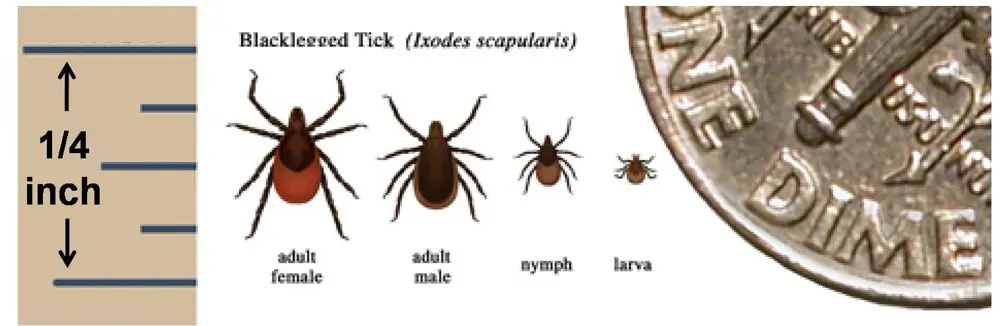
If you live in Shelton, chances are you've pulled a tick off a child, a dog or yourself at some point. Deer ticks, also called blacklegged ticks, are common all over Fairfield County, and they can carry the germs behind Lyme disease, anaplasmosis, babesiosis and a few other illnesses.
A handful of habits make a real difference, and most of them cost nothing. This guide goes through where ticks live in a typical Shelton yard, when they're out, what to do if one bites, and where a yard treatment fits in alongside the things you do yourself.
The wall at the back of the lawn
Ticks don't jump or fly. They wait on low plants and leaf litter for something to brush past, so in Shelton the edges of the yard matter far more than the middle of the lawn. Old stone walls are the big one. Many properties here still have fieldstone walls from the farm days, and mice and chipmunks live in the gaps. Young ticks feed on those small animals, which turns the walls into tick nurseries, and deer then carry the adults from yard to yard. The same walls often hide yellow jacket nests, so mind the gaps when you clear leaves in late summer.
Some parts of the area see more than others. White Hills lots with stone walls, fields and deer are prime tick country, and so are the wooded yards along the Far Mill River in Huntington. Next door, larger wooded properties in Monroe have long edges between lawn and forest. Even tidy subdivisions pick up ticks where the back fence meets a strip of woods.
- The strip where lawn meets woods
- Stone walls and woodpiles
- Leaf piles, ground cover and shady beds
- Tall grass along fences and paths
Poppy seeds in June, adults in November
Nymphs are the stage to watch. They're about the size of a poppy seed and feed mostly in late spring and early summer, and because they're so small, people miss them. That's when tick checks matter most. Adults are out in the fall and stay active on mild days right through winter until the ground freezes hard. A warm November afternoon spent raking can still mean ticks.
The Connecticut Department of Public Health points to a few steps: an EPA-registered repellent, long pants tucked into socks in the woods, a shower soon after coming inside, and a full tick check. Around the yard, keep the grass short, rake leaves away from the play set and patio, and put a strip of wood chips or gravel between lawn and woods. Move the bird feeder away from the house, since spilled seed draws mice, and mice feed young ticks. Keeping mice out of the house and yard helps more than people expect.
Behind the ears and between the toes
Ticks like warm, hidden spots. On children, check behind the ears, along the hairline, under the arms, behind the knees and around the waistband. On dogs, run your hands over the ears, neck and armpits and between the toes after every walk along the woods or a stone wall, and ask your vet about tick prevention. Toss outdoor clothes in the dryer on high heat for a few minutes when you come in.
If you find one attached, use fine-tipped tweezers, grab it close to the skin and pull straight up with steady pressure. Clean the bite and note the date. Watch for a rash, fever or flu-like symptoms over the next few weeks, and call your doctor with any concerns. The Connecticut Agricultural Experiment Station tests blacklegged ticks that were attached to a person, usually sent in through your local health department, so keep the tick in a sealed bag until you know whether to submit it.
To speak with someone about your home, telephone (203) 953-7616.
Where a yard treatment fits
A licensed tech can treat the yard edge, the stone walls and the shady beds during tick season. That lowers the number of ticks where your family spends its time. It doesn't replace repellent or tick checks, and it's best thought of as one layer among several. If you'd like someone to look at your yard, our page on tick and mosquito treatment in Shelton explains how it usually goes, and if ticks are one of several pests you deal with each year, ask about a year-round plan that covers the house as well.
Questions We Get
Do ticks really make it through a Connecticut winter?
Yes. They shelter in the leaf litter under the snow and come out on mild days. Adults can be active any time it climbs above freezing.
Is a dog tick the same as a deer tick?
No. American dog ticks are larger. The state lab tests only blacklegged ticks, but other kinds still bite, so remove any tick you find.