Carpenter Ants vs. Termites: Telling Them Apart
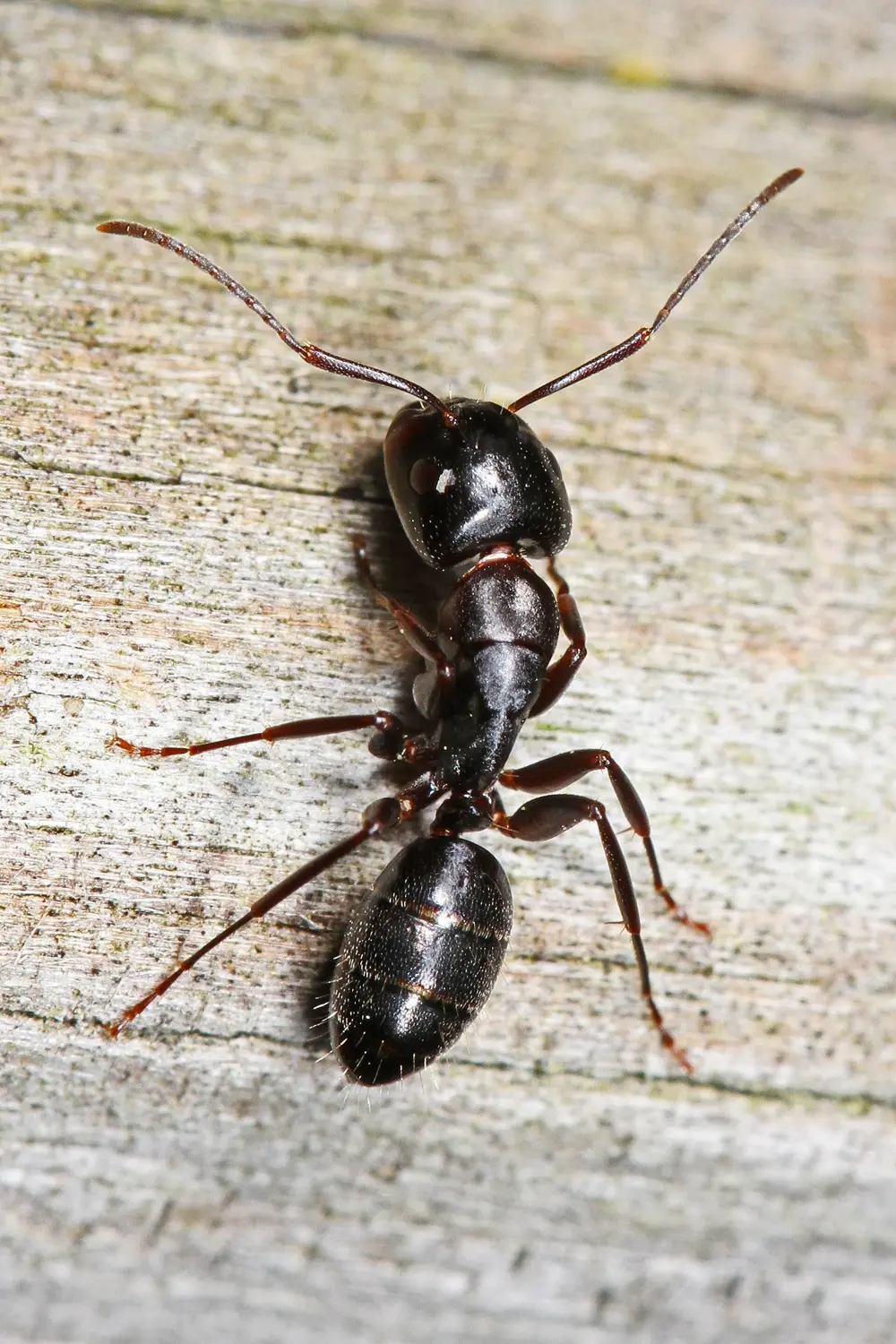
It's a warm spring day and a little cloud of winged insects has appeared by the basement window. Carpenter ants or termites? Both swarm in spring, both damage wood and both are common in Connecticut. The treatment is quite different, though, so it's worth knowing which one you're looking at before anyone starts spraying.
Termites have straight antennae, a thick waist and four wings of equal length. Carpenter ants have bent antennae, a pinched waist and front wings longer than the back pair. That's the quick version. The rest of this guide covers timing, the damage each one leaves and why Shelton houses so often end up with one or the other.
Bag a few and look closely
The Connecticut Agricultural Experiment Station uses three checks. Catch a few in a clear plastic bag, hold it up to the light and look.
Timing helps a little. Eastern subterranean termites swarm in spring, usually March through June and once in a while on a warm winter day, but not in summer or fall. Carpenter ants swarm in spring and early summer too, so timing alone won't settle it, but winged insects in late summer are much less likely to be termites. Where they come out matters a bit as well. Termite swarmers usually emerge near the foundation, in the basement or at a low window. Carpenter ant swarmers can show up anywhere their nest is, upstairs included.
- Antennae: straight and beaded on a termite, elbowed on an ant
- Waist: thick through the middle on a termite, pinched on an ant
- Wings: both pairs the same length on a termite, front pair longer on an ant
Sawdust or mud
Carpenter ants don't eat wood. They dig nests in wood that's already wet or softened and keep their tunnels clean, pushing out a sawdust-like debris called frass that piles up below the nest. Find frass under a window or along a baseboard and you're most likely dealing with ants.
Termites do eat wood, sound dry wood included. Their tunnels follow the grain and are lined with a mix of soil and waste, and you won't see sawdust. Instead you might find pencil-width mud tubes running up the foundation wall, or wood that sounds hollow when you tap it.
Why old Shelton houses get both
A lot of older Shelton homes sit on fieldstone with wood sills close to the soil. Add a leaky gutter or a damp basement and carpenter ants are perfectly content. Wooded lots with old stumps, deep mulch beds and decks tied into the house give termites a route from the soil to the framing. Newer subdivisions aren't off the hook either, since fresh mulch heaped against the siding draws both.
We hear about swarmers from all over the area. Older homes downtown near the river have porches and back stairs close to damp soil, and hillside lots in Derby push water against the uphill wall, which suits carpenter ants. In homes backing onto parkland in Trumbull, wooded soil and finished basements can hide termites until the day they swarm. Those same fieldstone sill gaps let mice in every fall, so ask about mouse exclusion along the sill line while someone's down there.
To speak with someone about your home, telephone (203) 953-7616.
What each one needs
For carpenter ants, the nest is the target. The tech traces the ants to the nest in the wall, the porch or a nearby tree and treats it, along with the routes into the house. Fixing the moisture problem keeps them from returning. More on how carpenter ant control works. For termites, the soil around the foundation gets a liquid treatment or bait stations go in the ground, depending on the house, since the colony lives in the soil. See termite inspection and treatment for what to expect.
In the meantime, save a few insects in a sealed bag, note where they came out and when, and don't spray or open up walls before someone has looked. Then give us a call.
Questions We Get
Can a house have both at once?
Yes. They like similar conditions, wood near soil and moisture. A tech can check for both on one visit.
Do swarmers inside mean the house is infested?
Usually they mean a colony is nearby or in the structure. It's worth having the house looked at soon rather than waiting to see.